Why South African Expats Are Ditching the Import Shops (And Buying Direct)
South African expats abroad can now buy authentic biltong, spices, and SA food brands directly from independent producers via Pimarket. Pay by card or crypto. No import markups. Just the real thing, delivered to your door.
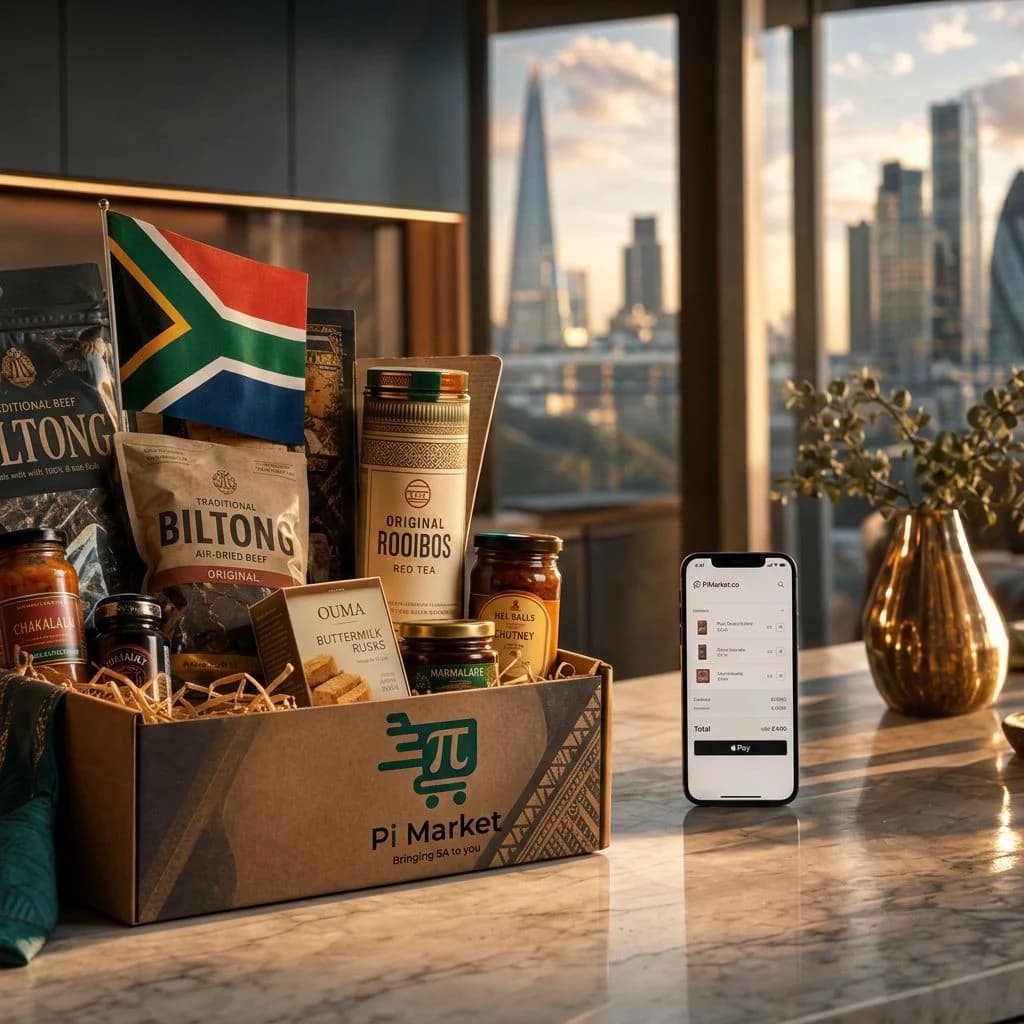
You live in London, Sydney, or New York. You want proper biltong, a packet of chips that you’ve loved since childhood, and some old school chutney. You have two options. You can beg a visiting relative to sacrifice half their luggage allowance, or you can go to a local import shop and pay a 300% markup.
Neither option is great. The first makes you a burden. The second makes you feel like you are being robbed.
Pimarket exists because the economics of exporting South African food are broken. The middlemen take too much, the local brands get squeezed, and you end up paying a fortune for a taste of home. We built a platform that connects you directly with independent South African brands. You get the authentic products you miss, and the people making them get a fair deal. That is the whole idea.
The Local Retail Struggle Is Real
Independent food brands in South Africa are having a hard time. Load shedding, rising supply chain costs, and a stagnant local economy mean that only 5% of South African food and snack brands are seeing strong volume growth. The big supermarkets dominate the shelf space, leaving small, artisan producers fighting for scraps.
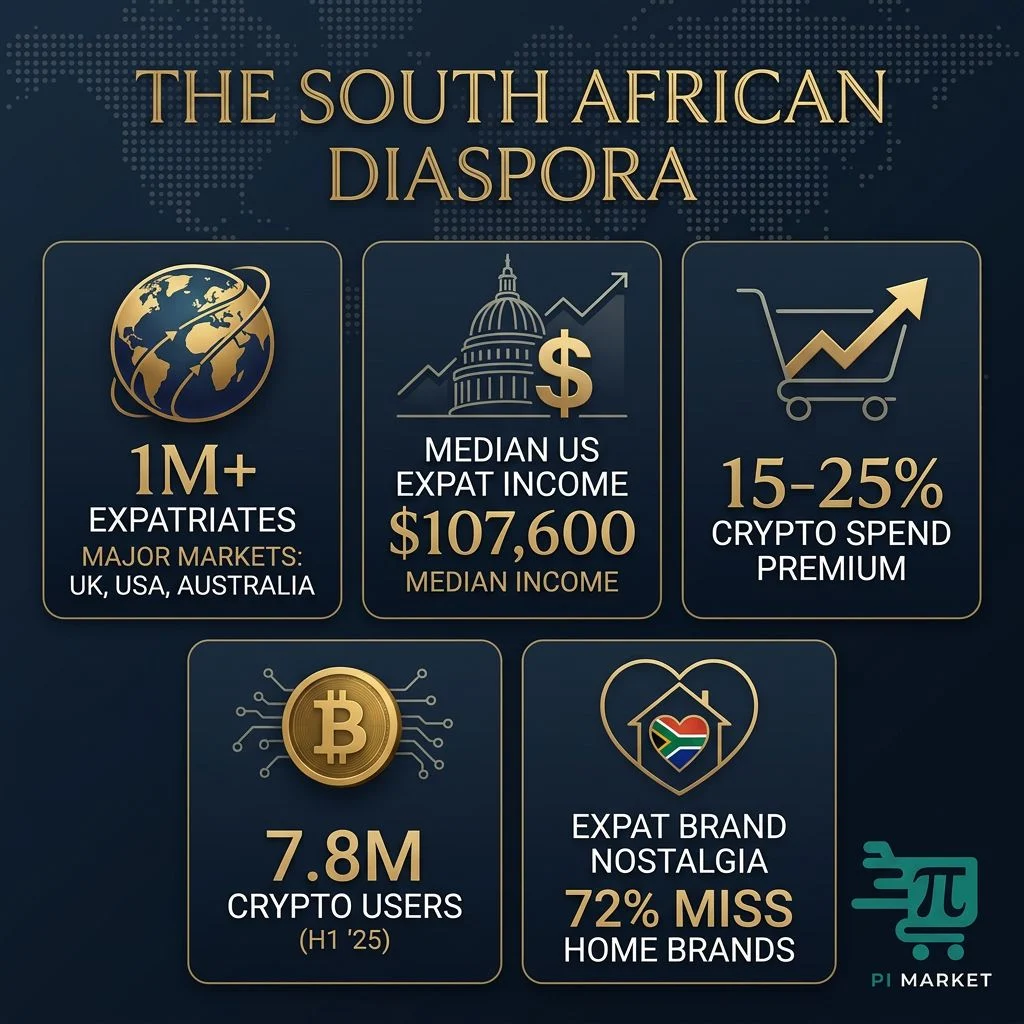
But here is the irony. While these brands struggle to find buyers at home, there are over a million South Africans living abroad who are actively searching for their products. A recent survey found that 72% of South African expats miss the brands they grew up with. The demand is there. The access is not. That is the gap Pimarket fills.
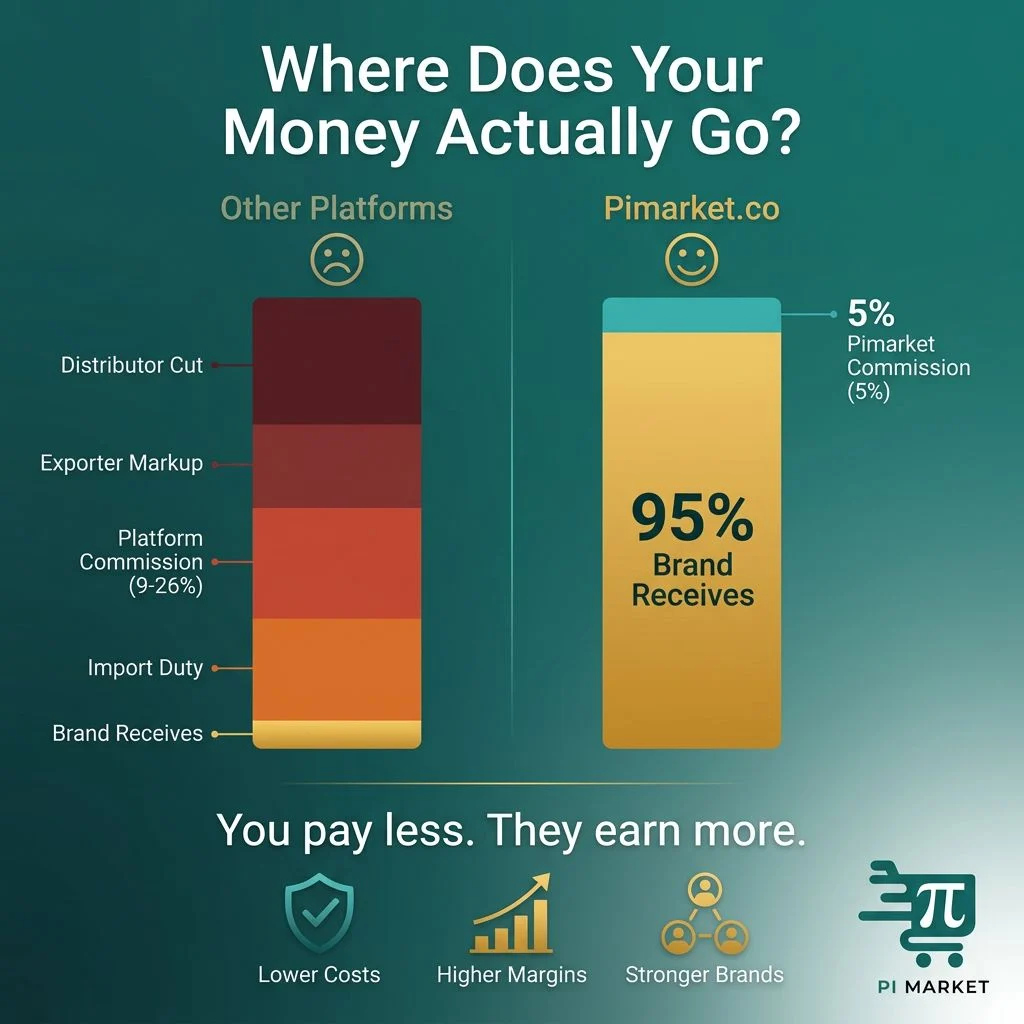
When you buy through Pimarket, you are not just getting your favourite snacks. You are directly supporting independent South African businesses that are navigating a genuinely difficult local market. We charge sellers a flat 5% commission. That means the money you spend actually goes to the people making the food, not to a chain of international distributors who have never tasted boerewors in their lives.
You Are Not the Average Online Shopper
Let us be straight with you. The South African diaspora is a premium demographic, and you probably already know that. In the US alone, the median income for a South African expat household is $107,595 — significantly higher than the average American household. In the UK, the minimum wage alone is nearly nine times higher than in South Africa.
You have disposable income. You are educated. You are digitally native. And you are tired of paying import shop prices for products that have been sitting in a warehouse for three months.
The overlap between the South African diaspora and cryptocurrency is also massive. In the first half of 2025, nearly 7.8 million South Africans used cryptocurrency platforms — roughly 13% of the entire population. That is not a fringe community. That is a mainstream one. And crypto shoppers, globally, have an average order value between 15% and 25% higher than standard online shoppers.
Pimarket accepts crypto payments through NOWPayments, which supports over 300 cryptocurrencies and 15 stablecoins. You can pay with Bitcoin, Ethereum, USDT, and more. It is fast, secure, and bypasses the exchange rates and international transaction fees that banks charge. If you hold digital assets, you know the value of a borderless economy. Pimarket is built for exactly that. If you prefer to pay by card, Pimarket processes Visa and Mastercard payments through Stripe — the global standard for online payments, used by millions of businesses in over 50 countries.
This Is Only the Start
We are starting with food because it is what expats miss the most. The biltong, the spices, the rusks, the chutney — the things that no local supermarket can replicate. But the South African diaspora does not just want food. You want the best of what South Africa produces, full stop.
That is why Pimarket is expanding. We are bringing SA streetwear, electronics, smart desk setups, audio gear, and artisan wellness products to the global market. Gen Z and millennial buyers are driving these categories, looking for unique, high-quality items that stand out from the mass-produced options available on Amazon or in the local high street.
Think about it. South Africa has a thriving independent design and tech scene. There are streetwear brands, audio equipment makers, and wellness producers doing genuinely world-class work. They just do not have the infrastructure to reach you. That is what we are building.
Stripe processes over $1.9 trillion annually and operates in more than 50 countries. NOWPayments supports over 300 cryptocurrencies. Both are fully integrated into Pimarket at checkout. You pay how you want, in the currency you hold, without conversion fees eating into your order. You pay how you want — Visa, Mastercard, or crypto — in the currency you hold, without conversion fees eating into your order.
Frequently Asked Questions
Here are answers to questions that you might have:
Is my payment secure?
Yes. If you pay by Visa or Mastercard, Pimarket uses Stripe — the global standard for online payments, processing over $1.9 trillion annually across 50+ countries. If you pay with crypto, Pimarket uses NOWPayments, a non-custodial crypto payment gateway that supports over 300 cryptocurrencies. Both options are available at every checkout. Neither requires you to create a separate account or share sensitive financial information beyond a standard card or wallet transaction.
Can I really buy food with Bitcoin or Ethereum?
Yes. Pimarket processes all card payments through Stripe, which accepts Visa and Mastercard globally. It is the same checkout experience you would expect from any major e-commerce platform
Why are the prices better than my local import shop?
Import shops buy from distributors, who buy from exporters, who buy from the brand. Every step adds a markup. Pimarket connects you directly with the brand. We take a flat 5% commission, and the rest goes to the seller. You get a better price, and they get a better margin. There is no distributor in the middle taking 20% and no exporter adding another 15% for the privilege of putting the product on a boat.
What if my order does not arrive?
Pimarket holds the funds securely until the seller provides proof of dispatch. If a seller fails to fulfill an order, you are fully refunded. We vet all brands before they can list on the platform to ensure they meet our standards for international shipping and packaging.
How does shipping work?
Sellers set their own international shipping rates, which are displayed clearly at checkout before you confirm your order. Because you are buying directly from the brand, they handle the packaging and dispatch. For non-perishable items like spices, rusks, and tea, standard international couriers work well. Sellers are responsible for ensuring their products meet the customs and import regulations of your destination country.
Do I need a Pimarket account to buy?
You can browse without an account, but creating one lets you track orders, save favourite brands, and check out faster. Registration takes under two minutes.
Is Pimarket only for South African expats?
No. Anyone can buy from Pimarket. But the platform is built specifically with the South African diaspora in mind — the product range, the payment options, and the community around it are all designed for people who know what they are looking for and why it matters.
What categories are coming next?
We are expanding into SA streetwear, electronics, smart desk setups, audio and lifestyle gear, and artisan drinks and wellness products. If you want to be notified when new categories go live, sign up for the Pimarket newsletter.
Got any questions for us or want to start selling products yourself? Contact us for more information today